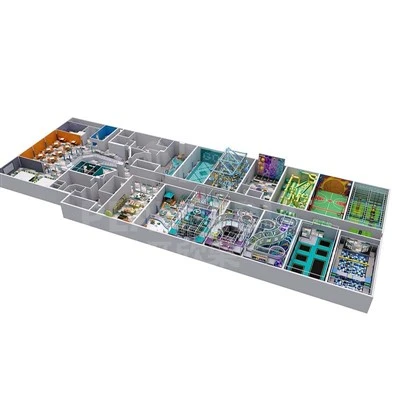
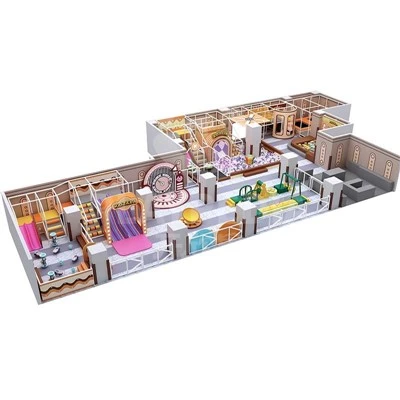
Question 1: When selecting equipment, should you prioritize the unit price or the overall revenue per square meter?
Answer: You should prioritize overall revenue per square meter. If the purchase price of a single piece of equipment is low but it takes up a lot of space and contributes little to revenue, it will actually lower the venue's overall profitability. The core objective of a 5,000-square-meter indoor playground is to maximize revenue from every inch of space. Playpedia Amusement's solutions prioritize combining different types of equipment based on revenue-per-square-meter metrics.
Question 2: Are there any licensing or qualification requirements for operating a 5,000-square-meter indoor playground?
Answer: Facility operations must comply with the requirements of local fire safety, culture and tourism, and other relevant regulatory authorities. Equipment must be accompanied by corresponding compliance test reports, and the planning proposals provided by service providers must meet mandatory standards for venue safety and evacuation routes to avoid issues during subsequent inspection and acceptance procedures.

Question 3: How can we verify that the equipment provided by suppliers poses no intellectual property compliance risks?
Answer: You can request that suppliers present relevant documentation, such as software copyrights and patents, for the corresponding products. Reputable, comprehensive service providers have complete intellectual property management systems and do not pose risks such as content infringement. Products from small, unbranded manufacturers are highly likely to lack the necessary certifications and are prone to compliance issues.
Question 4: What is the main reason for the wide variation in quotes for full-scenario solutions for large-scale venues?
Answer: The core differences stem from several factors, including the quality of equipment materials, content update services, ongoing maintenance and support, and the professionalism of the planning proposal. Some low-cost proposals may omit many hidden services, requiring additional ongoing costs after implementation, which can result in a higher overall investment.
Question 5: What core elements do a service provider's ongoing maintenance and support services typically include?
Answer: Reputable service providers' maintenance and support services generally include installation guidance, operator training, 24/7 remote technical support, spare parts supply, and regular firmware updates. These services can limit annual equipment downtime to fewer than 3 days, significantly reducing the venue's operational losses.
Question 6: What is the typical delivery timeline for a 5,000 indoor playground project?
Answer: From confirmation of the final proposal to the completion of installation and commissioning of all equipment, the typical timeline is approximately 40–45 days, with about 15 days set aside for a trial operation period. This schedule aligns well with the opening dates of most commercial complexes; however, projects with extensive customization requirements may experience a slight extension of the timeline.