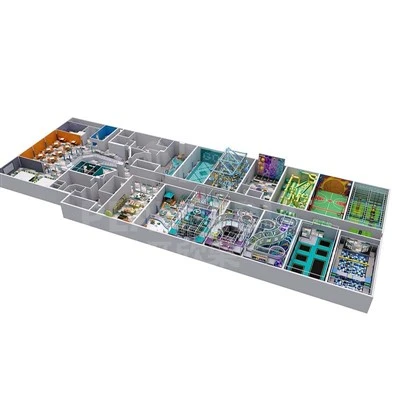
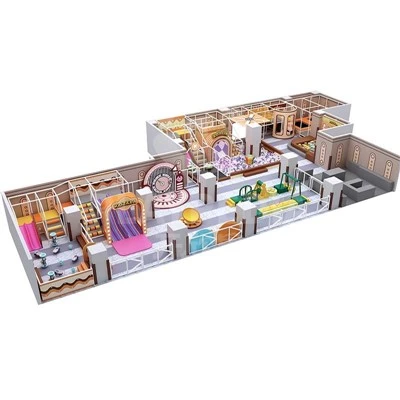
The material selection for indoor sports parks should take into account safety, durability, maintenance costs, and aesthetics. The following are some common indoor sports park materials and their advantages and disadvantages:
PVC sports floor:
Advantages: wear-resistant and non-slip, good shock absorption, easy installation (modular splicing), suitable for places with high frequency of use.
Disadvantages: poor high temperature resistance, easy to hide dirt at the joints.
Applicable scenarios: amateur leagues, commercial stadiums, school complexes, etc.
Silicon PU elastic floor:
Advantages: high elasticity, environmentally friendly and non-toxic, strong anti-aging performance, suitable for a variety of climatic conditions.
Disadvantages: professional construction is required, and the construction period is long.
Applicable scenarios: professional training halls, high-end commercial venues.
Solid wood sports floor:
Advantages: comfortable foot feel, good sound absorption, and meets international competition standards.
Disadvantages: high maintenance cost and easy to deform when wet.
Applicable scenarios: professional event venues, large sports centers.
Suspended assembled floor:
Advantages: low installation and maintenance costs, good elasticity and anti-slip performance, suitable for venues with limited budgets.
Disadvantages: average wear resistance and UV resistance.
Applicable scenarios: suitable for indoor and outdoor environments with limited budgets.