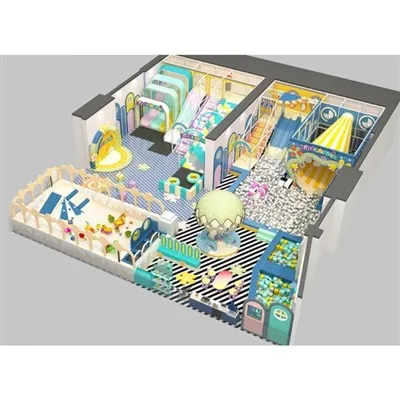
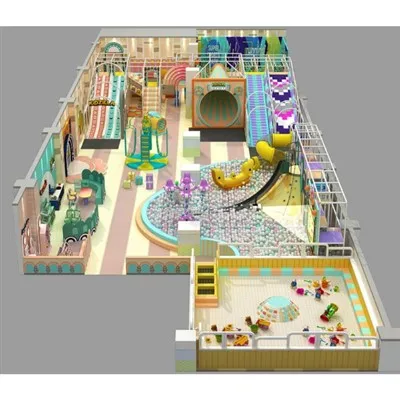
Many operators are puzzled: while other indoor playgrounds enjoy steady foot traffic and stable profits, their own facilities remain deserted and struggle to recoup their investment. The key difference lies not in floor space or ticket prices, but in the underlying logic behind equipment selection-profitable equipment is never simply "cheap," but rather a well-suited solution that balances safety, experience, durability, and operational efficiency.
I. Safety Is the Foundation of Profitability; Cutting Corners Leads to Major Losses
For high-profit indoor play centers, the top priority is safety and compliance-never compromising on materials or craftsmanship for the sake of a lower price. Many low-cost rides use recycled plastic and thin sheet metal, resulting in rough edges, burrs, and loose structures. While they may seem cost-effective in the short term, they are prone to safety incidents later on. This not only leads to liability claims but also completely erodes parents' trust.
Profitable equipment uses food-grade eco-friendly plastic and thickened galvanized steel tubes, with fully padded, rounded edges and no sharp corners. It strictly adheres to international safety standards such as CE and ASTM, featuring non-toxic, bite-resistant materials that allow even young children to play safely. Safety is no small matter; only when parents approve will they return, and only with stable foot traffic can sustained profitability be achieved.

II. The Experience Determines Repeat Business; Fun Is the Key to Attracting Visitors
Ordinary commercial playground equipment suffers from severe homogenization and offers limited play options, causing children to lose interest after just one visit. In contrast, high-profit kids parks feature immersive, interactive, and age-specific experiences that keep children coming back for more.
On one hand, integrating smart technology elements-such as interactive projection slides, motion-sensing obstacle courses, and light-and-shadow competition equipment-transforms ordinary play into a "magical experience," extending children's stay and indirectly increasing the likelihood of repeat spending. On the other hand, scientifically segmenting zones by age-with soft-padded ball pits ,Carousel and mini-climbing structures for younger children, and trampolines, ninja obstacle courses, and multi-level adventure forts for older children-covers the entire 3–16 age range, broadening the customer base. More importantly, the equipment's color scheme aligns with the theme, avoiding a cluttered, haphazard look. Harmonious color combinations make the space more appealing, encouraging children to visit and parents to share photos on social media, naturally leading to a repeat purchase rate far exceeding that of competitors.
III. Durability Reduces Long-Term Costs, Guaranteeing Profits for a Decade
Many operators focus solely on the initial purchase price of equipment, overlooking the costs of maintenance and replacement. Low-cost equipment typically lasts only 2–3 years, prone to fading, warping, and damage. Annual repair costs are high, and frequent closures for maintenance lead to a loss of customers.
Profitable commercial soft playground equipment features a modular design and superior craftsmanship, with a lifespan of 8–10 years. It is also easy to maintain and simple to refurbish. The reinforced steel frame offers exceptional load-bearing capacity, capable of withstanding high foot traffic. Eco-friendly materials resist aging and are easy to clean-requiring only simple daily wiping and eliminating the need for frequent major repairs. In the long run, the average daily depreciation cost of high-quality equipment is far lower than that of low-cost alternatives. A one-time investment ensures stable revenue for years, making it a true "low-cost, high-return" investment.
IV. Site Adaptability + Flexible Configuration: Maximizing Space Efficiency Is Key
The core of an indoor playground's profitability lies in high space efficiency-maximizing revenue within a limited area. Ordinary playgrounds blindly cram in equipment, resulting in chaotic traffic flow, overcrowding, a poor experience, and wasted space; high-profit playgrounds, however, customize equipment configurations based on floor area and target demographics.
150㎡ community stores focus on small indoor playground structures and soft play areas to precisely serve nearby families; Mall locations of 1,000㎡ or larger combine trampoline parks, ninja obstacle courses, role-playing, and smart interactive attractions to create a one-stop FEC that attracts visitors from across the city. Additionally, equipment is designed with room for upgrades, allowing modules to be swapped out based on seasons and trends to maintain a sense of novelty and ensure the park remains competitive over the long term.

Conclusion
The difference in profitability for indoor play centers lies in every detail of equipment selection. Safety and compliance are the prerequisites; a premium experience is the core; durability and peace of mind are the guarantees; and high-efficiency space utilization is the key. Playpedia Amusement has specialized in indoor amusement equipment for many years, focusing on original design and high-quality production. We provide one-stop solutions covering planning, design, production, installation, and operation and maintenance, helping you avoid product selection pitfalls and build a highly profitable indoor amusement park where every investment translates into sustained returns.