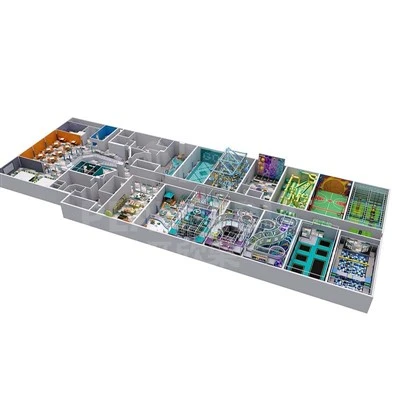
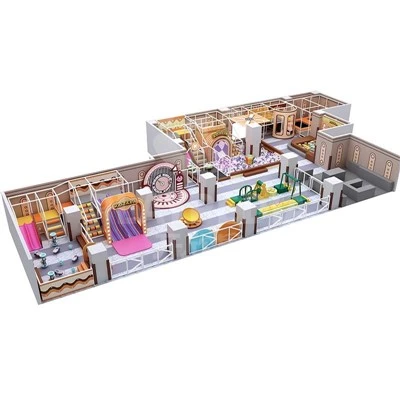
As parents increasingly focus on their children's physical and mental development, indoor play spaces in schools and kindergartens have evolved beyond mere entertainment areas.
They now serve as vital venues for fostering children's physical fitness, social skills, and cognitive growth. Selecting appropriate indoor play equipment not only impacts children's safety and well-being but also influences the functionality of educational settings.
Aligning with the latest national standards and industry practices, this article analyzes how to select appropriate indoor play equipment for schools and kindergartens from multiple perspectives.
It aims to help you create a safe, healthy, and creatively stimulating play environment for children.
I. Safety Compliance as the Foundation: Building an Essential Safety Barrier
Kids don't have strong self-protection abilities, so safety should always come first when buying indoor playground equipments. You've got to stick strictly to national mandatory standards, which lay out higher bars for materials, structure and protective measures. That's why it's critical to thoroughly check all compliance certifications during the procurement process.
Material Safety: Prioritize non-toxic, eco-friendly materials such as food-grade plastics, environmentally certified wood, and premium soft padding. Ensure total lead content, phthalate levels, and other parameters comply with national limits. Engineered wood products must provide formaldehyde emission test reports to prevent harmful substances from affecting children's health.
For structural safety, all edges and corners must be rounded to eliminate sharp protrusions. Connections must be secure and reliable to prevent loosening or detachment. Facilities with platforms exceeding 3 meters in height require structural load-bearing calculation reports to ensure compliance with static strength, fatigue strength, and other indicators, thereby preventing collapse risks.
Additionally, elevated equipment must be equipped with protective measures such as guardrails, safety nets, or cushioning pads. Enclosed play areas should have at least two exits to ensure unobstructed emergency evacuation routes.
Furthermore, during procurement, suppliers' manufacturing licenses, product quality certificates, design document appraisal reports, and third-party testing reports must be verified. Ensure equipment has passed relevant certifications like 3C certification to avoid purchasing uncertified products that pose safety hazards.
II. Tailoring to Age-Specific Needs for Precise Configuration
Kids at different ages have totally different levels of physical ability, thinking skills and what they want to do. So when you're choosing play equipment, you've got to follow the age-appropriate rule - otherwise, you're not just risking safety issues, you're also getting gear that's basically useless.
Toddlers aged 0–3 (usually in nursery) aren't that coordinated yet. Stick to low,soft play slide: padded crawling areas, toddler baby climbing soft play and rocking horses. Keep things simple and easy to figure out - no complicated structures that'll just baffle them.
For 3–6-year-old preschoolers? They're curious little explorers with basic movement skills down pat. Small climbing frames, interactive ball pits, block zones and role-play houses are all great picks for them.
Emphasis should be placed on interactivity and exploration to foster social skills and hands-on abilities.
Kids aged 6 to 12 have tons of energy and thrive on challenges. It's a great idea to bring in some moderately tough equipment - things like full climbing walls, fun zip lines, small ninja courses and trampoline parks.
However, risk levels must be strictly controlled, and safety protections must be fully implemented.
During procurement, facilities should be logically divided by age group based on functional zoning to prevent collisions between older and younger children. Ensure clear traffic flow in each area to avoid congestion and crossing paths.
III. Balancing Educational Value to Achieve "Play-Based Learning"
Schools and kindergartens shouldn't just buy playground equipment for fun - it's got to have real educational perks so kids can actually learn while they play.
When you're picking out gear, stick to what your school's teaching goals need, and choose stuff that helps kids build all kinds of skills.
For getting active: Grab climbing walls, balance beams and trampolines park - these help kids build stronger muscles, get better at coordinating their movements and improve their balance.
For sparking creativity: Set up block areas, puzzle spots and interactive painting walls - these are great for letting kids' imaginations run wild and boosting their inventiveness.
For making friends and sharing: Multi-player ball pits, pretend grocery stores and group building zones teach kids how to share and work as a team.
For learning basics: Pick puzzles and blocks with numbers and letters on them - they let kids soak up foundational school knowledge without even realizing it.
Avoid prioritizing "high-tech" features over practicality. Opt for equipment that is easy to operate and highly interactive, empowering children to take the lead in play rather than passively receiving experiences.
IV. Scientific Space Planning to Optimize Layout and Operational Costs
Given the limited indoor space in schools and kindergartens, facility procurement requires advance spatial planning that balances utilization rates and practicality while considering long-term operational costs.
Layout planning is all about matching equipment sizes to your actual space - both the square footage and the shape - so you don't end up with a cramped, cluttered mess. If your room is around 200 square meters, it's best to keep equipment at 60%–70% of the total area. Try the "active-quiet zone" trick: split the space into two parts - one for jumping trampolines, climbing walls and all the noisy fun, the other for building blocks or reading - that way, the two groups won't bother each other.
Be sure to set aside ample evacuation pathways to keep kids moving safely and unobstructed during activities.
Prioritize modular equipment that allows flexible reconfiguration and component replacement - this makes future adjustments and upgrades easier, while boosting space utilization.
When it comes to operational costs, pick wear-resistant, corrosion-resistant and easy-to-clean materials to cut down on daily cleaning and replacement frequency. Make sure metal parts are rustproofed, and plastic components have anti-aging properties. Supplier after-sales service is also critical; opt for vendors with solid market reputations and proven track records.
Clearly define warranty periods, repair response times, and other terms. When necessary, conduct on-site inspections of the supplier's production facilities to assess their manufacturing capacity and service support level.
V. Standardize Procurement Processes and Implement Full-Cycle Management Responsibilities
Standardized procurement processes are vital for ensuring facility quality. Schools and kindergartens must establish a full-cycle management system covering procurement, acceptance, usage, and maintenance.
Prior to procurement, conduct thorough needs assessments. Collaborate with teaching, logistics, and safety management departments to clarify facility categories, quantities, specifications, and budgets to avoid blind purchases.
Make sure to sign a proper contract when buying the equipment - it should clearly lay out all the key stuff: what the gear's specs are, when it needs to be delivered, what quality standards it has to meet, and what after-sales service you're entitled to. When the equipment shows up, get a team of pros together to check it over thoroughly - go through the looks, how it works, all the safety features, and the accessories, and make sure everything matches both the contract and national standards. Run a test to confirm there are no issues, then write up an acceptance report, get it logged into inventory, and start a detailed record for the equipment.
After commissioning, implement daily inspection and regular maintenance protocols. Conduct daily stability checks and weekly comprehensive inspections, promptly replacing damaged components. Maintain complete records of all inspections and maintenance activities, retaining these files for at least three years.
Concurrently, appoint dedicated safety management personnel to provide regular training for operators and maintenance staff. Develop safety emergency response plans and conduct periodic drills to ensure prompt handling of unforeseen incidents.
The procurement of indoor playground equipment for schools and kindergartens is a systematic endeavor that balances safety, education, and practicality. Only by adhering to national standards, prioritizing children's needs, and comprehensively evaluating safety compliance, age appropriateness, educational value, spatial planning, and lifecycle management can high-quality facilities be selected. This creates play spaces that are both safe and engaging, supporting children's holistic development. Educational institutions must earnestly fulfill their primary responsibilities by rigorously controlling procurement and management processes, ensuring indoor play equipment truly becomes a "facilitator" on children's growth journey.
How to Select indoor playground equipments Manufacturers and Suppliers When choosing play equipment for schools and kindergartens, selecting reliable manufacturers and suppliers is crucial. Professional suppliers not only offer diverse product options but also provide customized solutions tailored to specific needs. Additionally, reputable manufacturers deliver comprehensive after-sales services, including installation, maintenance, and upkeep, ensuring long-term stable operation.
Selecting an experienced and fully certified indoor playground equipment manufacturer ensures product quality and safety. For instance, Playpedia Amusement is a professional manufacturer of indoor playground equipment, specializing in providing high-quality facilities for schools, kindergartens, and similar institutions. If you require wholesale playground equipment, please feel free to contact us for more information on customized services and product details.