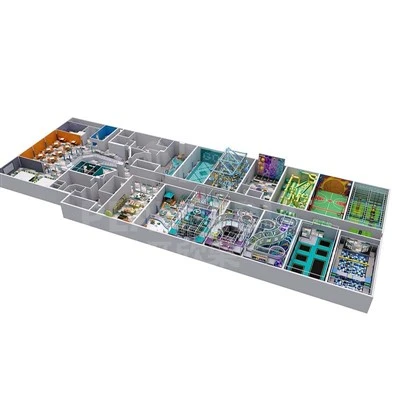
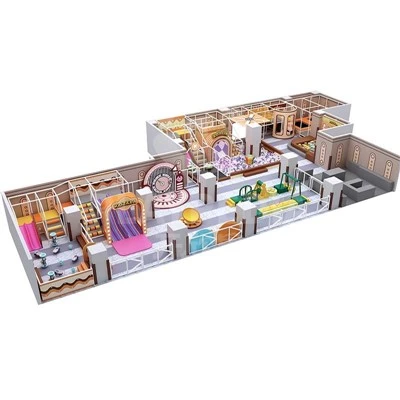
Indoor children's play equipment is the core component of a play center. When venue operations and service levels are comparable, the choice of equipment directly impacts customer retention and the center's operational performance. Many indoor playground investors fully understand the importance of equipment, yet lack sufficient experience when making purchases, making them prone to pitfalls: they may end up with products that fail to meet quality standards, or equipment that lacks appeal and fails to engage children, leading to a loss of customers. Drawing on years of hands-on industry experience, Playpedia Amusement has compiled seven core principles for purchasing indoor children's playground equipment for the reference of playground operators.
I. Safety First Principle:
Children have limited ability to protect themselves, so safety is the top priority when selecting equipment. Qualified indoor playground equipment must be made from eco-friendly, non-toxic, and odor-free raw materials. The entire structure must be free of burrs, sharp edges, and exposed hard protrusions; materials should be thick, wear-resistant, and meet weight-bearing standards; components and joints must be sturdy and secure to avoid safety hazards such as finger pinching, bumps, and parts falling off, thereby reducing play risks at the source.
II. Principle of Open-Ended Play
High-quality commercial indoor playground equipment is not limited to a single, fixed way of playing but allows children space for independent exploration. Take a ball pit as an example: children can roll, crawl, crawl through, and run; they can also play catch; and the activity can be extended to include educational games such as color recognition and counting. Open-ended design stimulates imagination and accommodates the creativity of different children, allowing a single set of equipment to inspire a variety of play scenarios.

III. Principle of Sustained Engagement
Equipment with limited play options and a monotonous experience can quickly lose its novelty for children, reducing their willingness to return. When purchasing, prioritize equipment with rich and engaging play options that support repeated use, extend children's stay duration, and boost the park's repeat visit rate.
IV. Principle of Sensory Enrichment
Moderate sensory stimulation can enhance the appeal of equipment while supporting children's development. Rich textures, vibrant colors, playful sound effects, and child-friendly designs all engage children's senses, helping them develop foundational concepts such as size, weight, balance, and color, thereby combining play with early learning.
V. Age-Tiered Design Principle
Indoor play centers cater to children aged 2–14, a wide age range with significant differences in abilities. Equipment configuration requires tiered planning: younger children should be provided with low-difficulty, highly protective attractions to avoid feelings of frustration; older children should be offered challenging, adventure-based equipment to prevent boredom. By catering to all age groups, every child who visits the park can find activities suited to their needs.
VI. Principle of Precision Craftsmanship and Durability:
The appeal of equipment depends on both material quality and aesthetic design. Roughly made, easily damaged equipment not only increases long-term maintenance costs but also raises safety concerns among parents; equipment with innovative designs and exquisite craftsmanship offers a better visual appeal, greater durability, and more stable long-term operation.
VII. Multi-Player Interaction Principle
Children naturally enjoy playing in groups, so equipment suitable for multiple participants is more popular. Multi-player interactive activities not only enhance the fun of play and reduce conflicts over equipment but also help children develop communication and collaboration skills; Parent-child equipment, meanwhile, can bring parents and children closer together and reinforce the park's family-friendly nature.

For first-time indoor play center investors, we recommend prioritizing reputable, direct-from-manufacturer suppliers of playground equipment. Reliable manufacturers not only ensure consistent product quality and are familiar with domestic and international safety standards but also stay abreast of market trends. They can provide tailored solutions based on site conditions to create indoor play spaces that children love and parents trust.