The children's economy is booming. More and more entrepreneurs are looking to open indoor play centre. It seems like an easy business to start. But it's full of hidden traps.
Pick the wrong location, and you'll struggle to get customers. Choose bad equipment, and you'll face safety risks. Run your park the same way everyone else does, and families will stop coming back. We've seen many new businesses fail within their first year. They had big dreams, but didn't plan well.
At Playpedia Amusement Playground, we've helped hundreds of clients avoid these mistakes. Now, we're sharing our proven business plan. It will help you skip 90% of the common startup mistakes. You won't need three years to learn what works. You can get it right from day one.
I. Market Research: Don't Rely on Gut Feelings-Let Data Speak
1. Target Audience Profile
Core Demographic: Parents of children aged 2-8, predominantly aged 25-35 from middle-class families who prioritize experiential education and safety for their children.
Spending Habits: Peak consumption occurs on weekends and holidays. Willing to pay for high-quality, themed play experiences that combine entertainment with education.
Pain Points: Demand safe, hygienic facilities with parent rest areas that free hands while enabling children's developmental growth through play.
2. Competitor Analysis
Direct Competitors: Small indoor play structures and children's playgrounds in nearby malls. Advantages include convenient access, but common issues include outdated equipment and severe homogenization.
Indirect Competitors: Family restaurants and early education centers also compete for families' time and money. Their biggest strength is offering mixed experiences, like play + education or play + dining. Differentiation Opportunity: Create thematic, immersive and highly interactive play spaces-such as forest adventure or ocean themes. This helps you stand out fast in a crowded market.
II. Location and Venue: The Make-or-Break First Step
Golden Rules for Site Selection Traffic is King: Choose large shopping malls, community commercial plazas or areas with lots of early education centers. This guarantees a steady flow of natural customers. Cost Control: Try to keep rent within 20%-30% of your expected monthly revenue. Too high rent will eat into your profits directly.
Amenity Bonus: The presence of parking lots, nursing rooms, and dining areas nearby significantly influences parental decisions.
2. Venue Planning Pitfall Guide
Circulation Design: Avoid linear pathways. Use circular or radial layouts so children and parents naturally pass through retail and dining zones during play, boosting secondary spending.
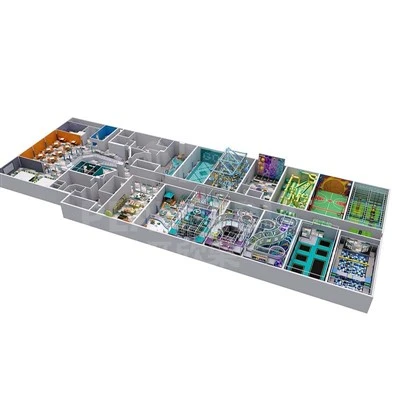
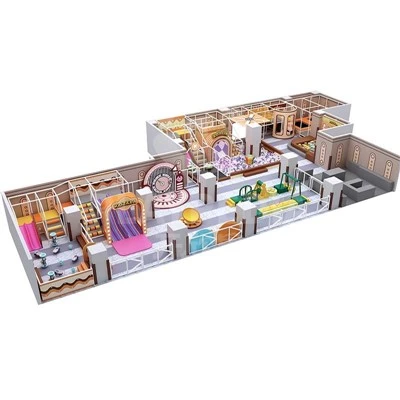
Functional Zones: Clearly delineate play structures, role-play areas, DIY craft zones, and parent lounges to ensure optimal play experiences and streamline management.
Safety Mandates: Fire exits must be kept clear at all times. All sharp edges need soft padding, and non-slip flooring is a must. These are your non-negotiable basic operational rules.
III. Equipment Selection: Quality Over Cost
1. Equipment Procurement Principles
Safety First: Select only play equipment with national quality inspection reports and compliance with EN1176 European standards. All commercial indoor playground equipment undergoes dual certification for worry-free operation.
High-Frequency Durability: Prioritize classic play equipment like slides, ball pits and trampolines. They have the highest repeat visit rates. Trendy equipment can help draw in more customers, but don't overspend on it.
Reserve Upgrade Space: Set aside 20% of the venue as flexible space in your design. Use this area to replace equipment with new trends later. It keeps your playground fresh and attractive to visitors.
2. Hidden Cost Alert
Installation & Maintenance: Don't only look at the equipment price. Add installation fees, transportation costs and annual maintenance fees to your total budget.
Wear and Tear: Soft play parts usually need replacing every 3 to 5 years. Trampoline springs and padding will wear out with heavy use. These are all long-term hidden costs you need to consider.
IV. Operations & Marketing: The Closed-Loop from Traffic to Customer Retention
1. Pre-launch Warm-up
Local Community Engagement: Join neighborhood mom groups to accumulate seed users through free trial vouchers and share-to-win promotions.
Cross-Industry Partnerships: Collaborate with nearby maternity stores, children's photography studios, and early education centers for mutual resource exchange and customer referrals.
Online Buzz Building: Post venue renovation vlogs and equipment unboxing videos on Facebook and YouTube to cultivate anticipation for a "must-visit hotspot."
2. Post-purchase Customer Retention
Membership System Design: Offer session passes, monthly memberships, and annual plans with perks like point redemption and birthday privileges to boost retention.
Themed Events for Traffic: Regularly host birthday parties, parent-child DIY workshops, and role-play theme days to make the venue a weekend staple for families.
Negative Review Crisis Management: Set up a 24-hour response mechanism. Apologize quickly for negative feedback and offer solutions. Turn crises into positive word-of-mouth.
V. Financial Projections: Clear Accounting Ensures Survival
1. Startup Capital Budget
Fixed Costs: Rent deposit + renovation + equipment procurement, accounting for approximately 70% of total investment.
Working Capital: Reserve at least 3-6 months of operational costs (staff wages, utilities, marketing expenses) to manage initial cash flow pressures.
2. Break-Even Analysis Key Metrics: If your average ticket price is ¥80 and you have 50 daily visitors, your monthly revenue is about ¥120,000. After paying rent, labor and consumable costs, you can usually get your investment back in 8 to 12 months. Upside Potential: Add value-added services such as food and beverage, retail and private party rentals. This can raise your profit margin from 30% to more than 50%.
Opening an indoor playground is never just about buying equipment and renting a space. It's a holistic project. A mistake in any single step can lead to the failure of the entire business.
This business plan distills practical insights from serving over 100 clients at Playpedia Amusement . Rather than navigating alone in the dark, stand on the shoulders of success. If you're planning your indoor soft playground, we offer end-to-end services-from site assessment and equipment design to operational training-ensuring you truly achieve "profit from day one."