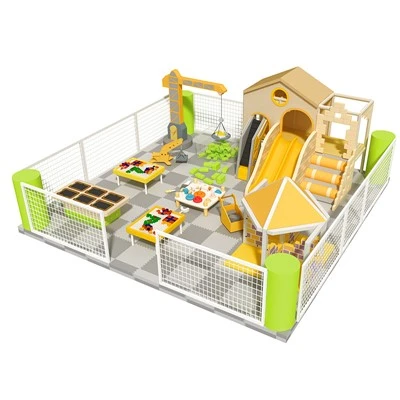
As a supplier of Small Soft Play equipment, I've had the privilege of witnessing firsthand the joy and excitement these spaces bring to children. Small soft play areas are not just a collection of colorful, cushioned structures; they are dynamic environments designed to stimulate a child's physical, cognitive, and social development. In this blog, I'll explore the diverse range of activities available in small soft play areas and highlight why they are an essential addition to any setting where children gather.
Physical Development Activities
One of the primary benefits of small soft play areas is the opportunity they provide for children to engage in physical activity. These spaces are filled with equipment that encourages movement, balance, and coordination.
Climbing and Crawling
Many small soft play areas feature Soft Play Slide and climbing structures. Climbing is a fantastic exercise that works multiple muscle groups, including the arms, legs, and core. It helps children develop strength and endurance while also improving their spatial awareness. Crawling, on the other hand, is an important developmental milestone that aids in the development of the nervous system and enhances hand - eye coordination. Children can navigate through tunnels, over ramps, and up small climbing walls, all while having fun.
Sliding
Slides are a classic feature in any soft play area. The Soft Play Slide offers a thrilling experience for children as they climb to the top and then zoom down. Sliding not only provides a sense of excitement but also helps children develop a sense of speed and gravity. It also requires balance and the ability to control their body as they sit or stand on the slide.
Jumping and Bouncing
Some small soft play areas are equipped with mini trampolines or bouncy pads. Jumping and bouncing are great for developing leg strength, balance, and proprioception (the sense of the body's position in space). Children can jump freely, try different jumps, or even play simple games like jump rope on the bouncy surface.
Cognitive Development Activities
Small soft play areas are also a haven for cognitive development. The various structures and activities stimulate a child's thinking, problem - solving, and creativity.
Pretend Play
Soft Play House is a common feature in small soft play areas. These houses provide a space for children to engage in pretend play. They can imagine themselves as doctors, chefs, or firefighters and create elaborate storylines. Pretend play helps children develop language skills, social skills, and the ability to think abstractly. They learn to take on different roles, understand different perspectives, and communicate with their peers.
Puzzle and Maze Solving
Some soft play areas incorporate puzzles and mazes into their design. These can be in the form of large, soft puzzle pieces or maze - like structures that children need to navigate through. Solving puzzles and mazes helps children develop critical thinking skills, logical reasoning, and patience. They learn to analyze problems, come up with solutions, and persevere until they complete the task.
Color and Shape Recognition
The colorful and diverse shapes of the soft play equipment provide an opportunity for children to learn about colors and shapes. Parents and caregivers can engage children in simple games, such as asking them to find a specific color or shape in the play area. This helps in the early stages of learning and lays the foundation for more advanced mathematical concepts.
Social Development Activities
Small soft play areas are excellent places for children to learn how to interact with others. They provide a safe and supportive environment where children can practice social skills.
Cooperative Play
When children play together in a soft play area, they often need to cooperate to achieve a common goal. For example, they might need to work together to build a structure using soft blocks or take turns on a slide. Cooperative play helps children learn about sharing, taking turns, and respecting others' boundaries. They develop empathy and the ability to work as part of a team.
Communication
In the soft play area, children communicate with each other constantly. They talk about their games, share their ideas, and ask for help. This helps in the development of language skills and the ability to express themselves clearly. They also learn to listen to others, which is an important aspect of effective communication.
Sensory Development Activities
Soft play areas are designed to stimulate a child's senses. The soft, cushioned materials, bright colors, and various textures provide a multi - sensory experience.
Tactile Exploration
The soft play equipment is made of different materials, such as foam, fabric, and rubber. Children can touch and feel these materials, which helps in tactile exploration. They learn about different textures, such as smooth, rough, soft, and hard. This sensory experience is important for the development of the brain and can have a calming effect on children.
Visual Stimulation
The bright colors and interesting shapes of the soft play equipment provide visual stimulation. Children are naturally attracted to bright colors, and the diverse visual elements in the play area help in the development of their visual perception. They learn to distinguish between different colors, patterns, and shapes.
Auditory Stimulation
Some soft play equipment makes sounds, such as squeaky toys or bells. These sounds provide auditory stimulation and help children develop their sense of hearing. They learn to recognize different sounds and understand the cause - and - effect relationship between their actions and the sounds produced.
Why Choose Our Small Soft Play Equipment
At our company, we take pride in providing high - quality Small Soft Play equipment. Our products are designed with safety in mind, using non - toxic materials and meeting all relevant safety standards. We offer a wide range of designs and configurations to suit different spaces and budgets. Whether you're looking for a small, compact play area for a daycare center or a larger, more elaborate setup for a family entertainment center, we have the solution for you.
Our team of experts can work with you to design a custom soft play area that meets your specific needs. We understand that every space is unique, and we strive to create a play area that is both functional and engaging.


If you're interested in learning more about our Small Soft Play equipment or would like to discuss a potential project, we encourage you to get in touch with us. We're here to answer any questions you may have and to help you create the perfect soft play area for your children. Whether you're a daycare provider, a school, or a family looking to set up a play area at home, we have the expertise and the products to make it happen.
References
- Berk, L. E. (2018). Development Through the Lifespan. Pearson.
- Singer, D. G., Golinkoff, R. M., & Hirsh - Pasek, K. (2006). Play = Learning: How Imaginative Play Motivates Children's Cognitive, Social, and Emotional Growth. Oxford University Press.
- Frost, J. L., Wortham, S. C., & Reifel, S. (2012). Play and Child Development. Pearson.