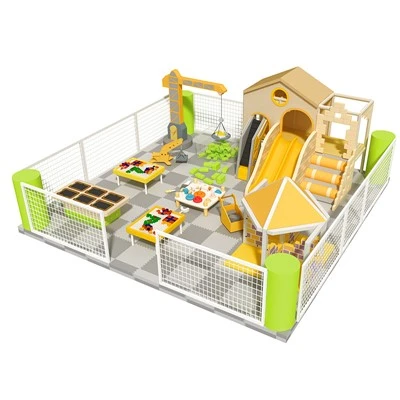
Hey there! As a supplier of Theme Indoor Parks, I've seen firsthand how important it is to have proper child - supervision requirements in place. In this blog, I'll be sharing some key aspects of what those requirements should be.


First off, let's talk about why child supervision is crucial in an indoor park. Kids are full of energy and love to explore, which is great, but it also means they can get into situations where they might hurt themselves. An indoor park, whether it's a Theme Indoor Park, Spring Indoor Playground Center, or Childrens Indoor Play Area, is filled with various play equipment and activities. Without proper supervision, there's a higher risk of accidents.
Staff - to - Child Ratio
One of the most fundamental requirements is the staff - to - child ratio. This ratio ensures that there are enough trained eyes on the kids at all times. For younger children, say those under 5 years old, a lower ratio is needed. A good rule of thumb could be one staff member for every 5 - 8 kids. These little ones are more likely to take risks without fully understanding the consequences, so they need closer attention.
As children get older, around 6 - 12 years old, the ratio can be adjusted to something like one staff member for every 10 - 15 kids. They have a bit more self - control and understanding of safety rules, but still need supervision. For teenagers, the ratio can be slightly higher, maybe one staff for every 15 - 20 kids. However, this doesn't mean that supervision can be lax. Teenagers might engage in more high - energy activities that could lead to injuries if not monitored.
Staff Training
Staff training is another vital part of child supervision. All employees working in the indoor park should undergo comprehensive training. This training should cover basic first - aid skills, like how to handle minor cuts, bruises, and burns. They should also be trained to recognize the signs of more serious injuries, such as head trauma or broken bones, and know when to call for emergency medical help.
In addition to first - aid, staff should be trained in behavior management. They need to know how to handle difficult situations, like when kids are arguing or not following the park's rules. Positive reinforcement techniques should be taught so that staff can encourage good behavior rather than just punishing bad behavior.
Visibility and Accessibility
The layout of the indoor park plays a big role in child supervision. There should be good visibility throughout the park. Staff should be able to see all areas of the play space from their assigned stations. This means that there should be no blind spots where kids could get into trouble without being noticed.
Accessibility is also important. Staff should be able to quickly reach any part of the park in case of an emergency. Play equipment should be arranged in a way that allows for easy movement. For example, there should be clear walkways between different play areas so that staff can move around without any obstacles.
Safety Rules and Signage
Clear safety rules should be established and communicated to both kids and parents. These rules could include things like no running in certain areas, wearing appropriate footwear, and not pushing other kids. Signage should be placed throughout the park to remind everyone of these rules. The signs should be easy to read, with pictures if possible, especially for younger children.
Parents should also be informed about their role in supervision. They should be made aware that while the park staff is there to help, they also have a responsibility to keep an eye on their own children. Some parks might require parents to stay within the park premises at all times while their kids are playing.
Parental Involvement
Parental involvement is a key part of child supervision in an indoor park. Parents should be encouraged to participate in their children's play experience. They can help enforce the safety rules and teach their kids about responsible behavior. Some parks offer parent - child activities, which not only strengthen the parent - child bond but also make supervision easier.
Parents should also be provided with information about the park's supervision policies and procedures. This way, they know what to expect and can feel more confident leaving their kids in the park's care.
Regular Inspections
Regular inspections of the play equipment are necessary to ensure the safety of the kids. Equipment should be checked for any signs of wear and tear, loose parts, or structural damage. Inspections should be done daily before the park opens and periodically throughout the day. Any issues found should be addressed immediately.
In addition to equipment inspections, the overall cleanliness of the park should be maintained. A dirty environment can lead to health problems for the kids, such as infections. Floors should be swept and mopped regularly, and play equipment should be sanitized.
Emergency Preparedness
The indoor park should have an emergency preparedness plan in place. This plan should cover various scenarios, such as fires, earthquakes, or medical emergencies. Staff should be trained on how to implement this plan. Evacuation routes should be clearly marked, and regular drills should be conducted so that everyone knows what to do in case of an emergency.
Monitoring and Evaluation
Finally, the park's child - supervision system should be continuously monitored and evaluated. Data on accidents, injuries, and behavior incidents should be collected and analyzed. This data can help identify areas where the supervision system needs improvement. For example, if there are a lot of accidents in a particular play area, it might be necessary to change the layout or add more staff in that area.
If you're interested in setting up a high - quality indoor park with top - notch child - supervision requirements, I'd love to talk to you. We can discuss how our Theme Indoor Park solutions can meet your needs and ensure a safe and fun environment for kids. Whether you're looking to open a Theme Indoor Park, Spring Indoor Playground Center, or Childrens Indoor Play Area, we've got the expertise and products to make it happen. Get in touch with us to start the conversation about your indoor park project.
References
- American Academy of Pediatrics. (2018). Playground safety. Pediatrics, 142(6), e20182181.
- National Program for Playground Safety. (2019). Playground safety handbook.
- Centers for Disease Control and Prevention. (2020). Injury prevention and control: Nonfatal injuries.