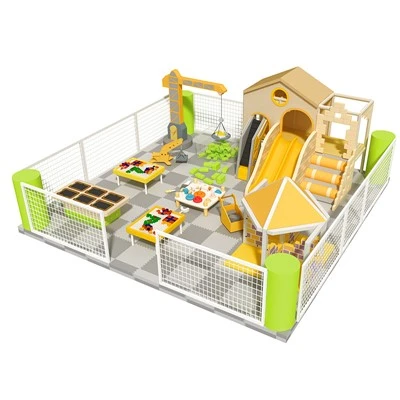
An indoor play house is not just a place filled with colorful toys and structures; it's a haven of fun, learning, and development for children. As a leading supplier of indoor play houses, I've witnessed firsthand the numerous benefits these spaces offer to kids and their parents. In this blog post, I'll delve into the various advantages of an indoor play house and why it's a valuable addition to any community or family setting.
Physical Development
One of the most obvious benefits of an indoor play house is the promotion of physical activity. Children are naturally energetic, and an indoor play house provides them with a safe and stimulating environment to burn off that energy. With features like climbing structures, slides, and obstacle courses, kids can engage in activities that enhance their motor skills, balance, and coordination. For instance, climbing a Soft Play Bridge requires strength, balance, and spatial awareness, all of which contribute to the development of their gross motor skills.
Moreover, indoor play houses often include soft play areas that are designed to be gentle on children's bodies. These areas are made from materials like foam and padded surfaces, reducing the risk of injuries while still allowing kids to jump, roll, and play freely. This type of physical activity is essential for children's overall health and well-being, as it helps to build strong muscles, bones, and joints.
Cognitive Development
In addition to physical development, indoor play houses also play a crucial role in cognitive development. Through play, children learn to explore, experiment, and problem-solve. They are exposed to new ideas, concepts, and challenges, which stimulate their brains and enhance their thinking skills. For example, a Soft Play House may include pretend play areas such as a kitchen, a doctor's office, or a grocery store. In these areas, kids can role-play different scenarios, which helps them to understand social roles, develop language skills, and learn about cause and effect.
Furthermore, many indoor play houses incorporate educational elements into their design. They may have interactive games, puzzles, and learning stations that are designed to teach kids about numbers, letters, shapes, and colors. These activities not only make learning fun but also help to reinforce important academic concepts in a hands-on way.
Social and Emotional Development
Indoor play houses are also excellent places for children to develop their social and emotional skills. When kids play together in a play house, they learn to share, take turns, cooperate, and communicate with others. They have the opportunity to make new friends, build relationships, and develop a sense of community. For example, in a group play activity, children may need to work together to solve a problem or achieve a common goal. This type of collaborative play helps them to develop teamwork skills and learn how to respect the opinions and feelings of others.
In addition, indoor play houses provide a safe and supportive environment for children to express their emotions. They can let go of their stress and anxiety through play, and learn how to manage their emotions in a healthy way. For instance, if a child is feeling frustrated or angry, they can release their energy by playing on a slide or climbing a structure. This type of physical activity can help to reduce stress and improve their mood.
Safety and Comfort
As a supplier of indoor play houses, I understand the importance of safety and comfort. That's why all of our play houses are designed and built with the highest safety standards in mind. We use only high-quality materials that are durable, non-toxic, and easy to clean. Our play structures are also designed to be age-appropriate, with features that are safe and accessible for children of all ages.
In addition to safety, we also focus on providing a comfortable and inviting environment for children. Our play houses are designed to be bright, colorful, and engaging, with plenty of space for kids to move around and play. We also offer a variety of seating areas, snack bars, and restrooms to ensure that parents and children have a comfortable and enjoyable experience.
Convenience and Accessibility
Another advantage of an indoor play house is its convenience and accessibility. Unlike outdoor playgrounds, indoor play houses are not affected by weather conditions, which means that kids can play there all year round. They are also typically located in easily accessible areas, such as shopping malls, community centers, or schools, making them convenient for parents to take their children to.
In addition, many indoor play houses offer a variety of membership options and pricing plans, making them affordable for families of all income levels. Some play houses also offer birthday party packages, which include exclusive use of the play area, party decorations, and catering services. This makes it easy for parents to plan a fun and memorable birthday party for their children without having to worry about the details.
Conclusion
In conclusion, an indoor play house is a valuable investment for any community or family setting. It provides children with a safe, fun, and stimulating environment to play, learn, and grow. Through physical activity, cognitive development, social and emotional learning, and safety and comfort, indoor play houses offer a wide range of benefits that can have a positive impact on children's lives.


If you're interested in learning more about our indoor play houses or would like to discuss your specific needs and requirements, please don't hesitate to contact us. We would be happy to provide you with more information and help you find the perfect play house for your children.
References
- Smith, J. (2018). The Benefits of Play for Children's Development. Journal of Child Psychology and Psychiatry, 59(1), 1-11.
- Piaget, J. (1962). Play, Dreams and Imitation in Childhood. New York: Norton.
- Vygotsky, L. S. (1978). Mind in Society: The Development of Higher Psychological Processes. Cambridge, MA: Harvard University Press.