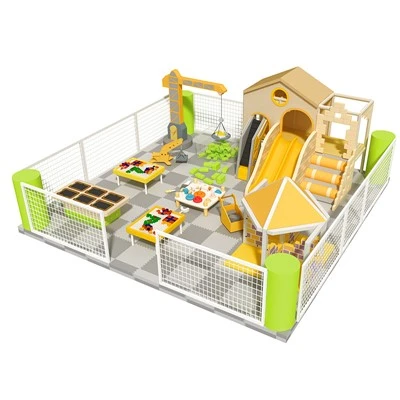
Hey there! As a supplier for indoor playgrounds, I've seen my fair share of situations where complaints about other customers pop up. It's a tricky issue, but with the right approach, indoor playgrounds can handle these complaints like pros.
First off, let's talk about why complaints about other customers happen in the first place. One common reason is rough play. Kids can get a bit over - excited, and sometimes they might push, shove, or be too aggressive on the play equipment. This can make other kids and their parents uncomfortable. Another issue is improper behavior, like not following the playground rules. For example, some kids might run in areas where walking is required, or they might bring in outside food and drinks when it's not allowed.
So, how do indoor playgrounds deal with these complaints? Well, the first step is to have a clear set of rules. Every indoor playground, whether it's a Soft Play Centre, an Indoor Fun Park, or an Indoor Sand Playground, should have a list of rules posted clearly at the entrance and around the play area. These rules should cover things like no rough play, no running in certain areas, and no outside food.
When a customer makes a complaint about another customer's behavior, the staff's response is crucial. The staff should listen to the complaint attentively. They need to make the complaining customer feel heard and understood. For example, they can say something like, "I'm really sorry you're having this problem. Can you tell me exactly what happened?" This shows that the playground takes the issue seriously.
After listening, the staff should assess the situation. They need to figure out if the behavior is a minor issue that can be resolved with a gentle reminder or if it's a more serious problem that requires stricter action. If it's a minor issue, like a kid running in a non - running area, the staff can approach the child or the parent politely and say, "Hey, we have a rule here about not running. Could you please walk?"
In some cases, though, the behavior might be more serious. Maybe a child is being repeatedly aggressive towards others. In this situation, the staff should first separate the child from the other kids to prevent any further harm. Then, they should talk to the parents. It's important to be diplomatic when speaking to the parents. Instead of accusing, they can say something like, "We've noticed that your child has been a bit rough with the other kids. We understand that kids get excited, but for the safety of everyone, could you help us remind your child to play gently?"
Indoor playgrounds can also use some preventive measures to reduce the number of complaints. For instance, they can have enough staff on the floor to monitor the play area. More staff means they can spot potential problems before they turn into complaints. They can also organize activities and games that encourage positive interaction among the kids. This way, the kids are more likely to play nicely with each other.
Another aspect is training the staff. All employees should be trained on how to handle complaints. They should know the playground's rules inside out and be able to enforce them fairly. Training should also cover communication skills, so they can talk to both the complaining customers and the ones with the problem behavior in a calm and effective way.
Now, let's consider the impact of not handling complaints well. If a playground ignores complaints or doesn't handle them properly, it can lead to a bad reputation. Customers are likely to share their negative experiences with friends and family, and they might not come back. On the other hand, if a playground handles complaints effectively, it can build a good reputation. Customers will feel that their concerns are valued, and they'll be more likely to return and recommend the place to others.
As a supplier, I know that the design of the indoor playground can also play a role in reducing complaints. For example, in a Soft Play Centre, having separate areas for different age groups can prevent older, more energetic kids from overwhelming the younger ones. This can reduce the chances of rough play and related complaints.
In an Indoor Fun Park, clear signage can help kids and parents understand where they can and can't go. This reduces the chances of rule - breaking and the resulting complaints. And in an Indoor Sand Playground, having enough sand toys and space can prevent kids from arguing over who gets to use what.
If you're thinking about setting up an indoor playground or upgrading your existing one, it's important to keep all these aspects in mind. A well - managed indoor playground that handles complaints effectively is more likely to be successful.
We, as a supplier, can offer you high - quality equipment for your indoor playground. Whether you're looking for a Soft Play Centre, an Indoor Fun Park, or an Indoor Sand Playground, we've got you covered. Our equipment is not only safe and durable but also designed to enhance the play experience for kids.
If you're interested in learning more about our products and how we can help you create a great indoor playground, don't hesitate to reach out. We're here to assist you with all your indoor playground needs. Contact us for a free consultation and let's start this exciting journey together!
References:


- General knowledge from years of experience in the indoor playground supply industry.
- Observations from visiting various indoor playgrounds and interacting with staff and customers.