Hey there! As a supplier for soft play centres, I've been thinking a lot about the policy on sharing play equipment in these places. It's a topic that's not only interesting but also super important for the smooth running of these fun spots.
First off, let's talk about why sharing play equipment is a big deal in soft play centres. Soft play centres are all about kids having a blast, making friends, and developing their social skills. Sharing play equipment is a key part of that social experience. When kids share, they learn about cooperation, taking turns, and respecting others' feelings. It's like a mini - society where they start to understand the rules of getting along.
But here's the thing. Implementing a sharing policy isn't always a walk in the park. You've got different age groups, different personalities, and different levels of understanding when it comes to sharing. For younger kids, the concept of sharing can be a bit tricky. They're still in that phase where they see something they like and think, "Mine!" And that's totally normal. Older kids, on the other hand, might understand the idea of sharing but could still struggle with actually giving up their favorite toy or piece of equipment.


So, do soft play centres have a policy on sharing play equipment? Well, most of them do. A common policy is the "take turns" rule. For example, if there's a popular slide, the staff might tell kids that they can go down a certain number of times and then have to let someone else have a go. This way, everyone gets a chance to enjoy the equipment.
Another policy could be the "group play" approach. Instead of having kids play with equipment on their own, the soft play centre might encourage them to play in groups. This could be especially effective for things like building blocks or pretend play sets. By working together, kids not only learn to share but also develop teamwork skills.
However, enforcing these policies isn't always easy. Soft play centre staff have to be on their toes, constantly monitoring the situation and stepping in when needed. They need to be patient, understanding, and good at communicating with the kids. Sometimes, it might take a little bit of explaining and gentle persuasion to get a child to share.
Now, let's talk about the role of the play equipment itself. The type of equipment you have in a soft play centre can actually influence how well the sharing policy works. For instance, if you have unique and limited - edition equipment, kids might be more possessive of it. On the other hand, if you have multiple sets of the same equipment, it becomes easier for kids to share.
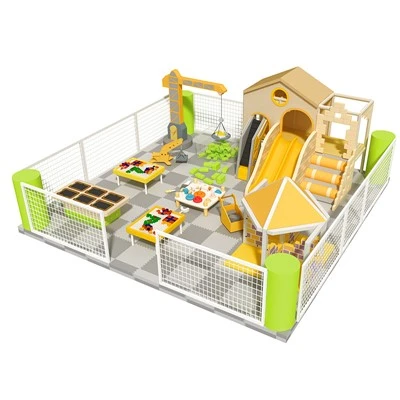
As a supplier, I've seen firsthand how different types of play equipment can impact the sharing dynamic. Take the Indoor Fun Park for example. It's got a whole bunch of different play areas, which means there's plenty for kids to do. With so many options, kids are less likely to fight over one particular piece of equipment. They can just move on to something else if they can't get what they want right away.
The Japanese Style Indoor Playground is another great example. It often features a lot of cooperative play elements. There are things like group - building structures and shared play stations. This design encourages kids to work together and share from the get - go.
And then there's the Indoor Sand Playground. Sand play is inherently a sharing activity. Kids can use the same sand, shovels, and buckets to build their sandcastles. It's a great way to teach them about sharing and cooperation in a fun and natural way.
But it's not just about the type of equipment. The layout of the soft play centre also matters. If the equipment is spread out and there are clear play areas, it's easier for kids to understand where they can play and what they can share. On the other hand, if the equipment is all jumbled up, it can lead to confusion and more conflicts over sharing.
As a supplier, I always try to work with soft play centres to create the best possible environment for sharing. I provide them with a variety of play equipment that is designed to encourage social interaction. I also offer advice on how to arrange the equipment to make sharing easier.
Now, if you're running a soft play centre or thinking about starting one, you might be wondering how to choose the right play equipment to support your sharing policy. Here are a few tips:
- Look for equipment that can be used by multiple kids at the same time. For example, a large trampoline or a multi - seat swing.
- Choose equipment that promotes cooperation, like building sets or team - based games.
- Consider the age range of the kids who will be using the equipment. Make sure it's appropriate for their skill level and understanding of sharing.
In conclusion, sharing play equipment is a crucial part of the soft play centre experience. Most soft play centres do have a policy on sharing, but it takes a combination of the right equipment, a good layout, and effective staff management to make it work.
If you're interested in learning more about the play equipment we offer or want to discuss how we can help you create a sharing - friendly soft play centre, I'd love to hear from you. Just reach out, and we can start a conversation about your needs.
References
- "Child Development and Social Skills in Play Environments" - A research paper on the importance of sharing in play settings.
- "Designing Play Spaces for Social Interaction" - A study on how the layout and equipment in play centres affect sharing behavior.